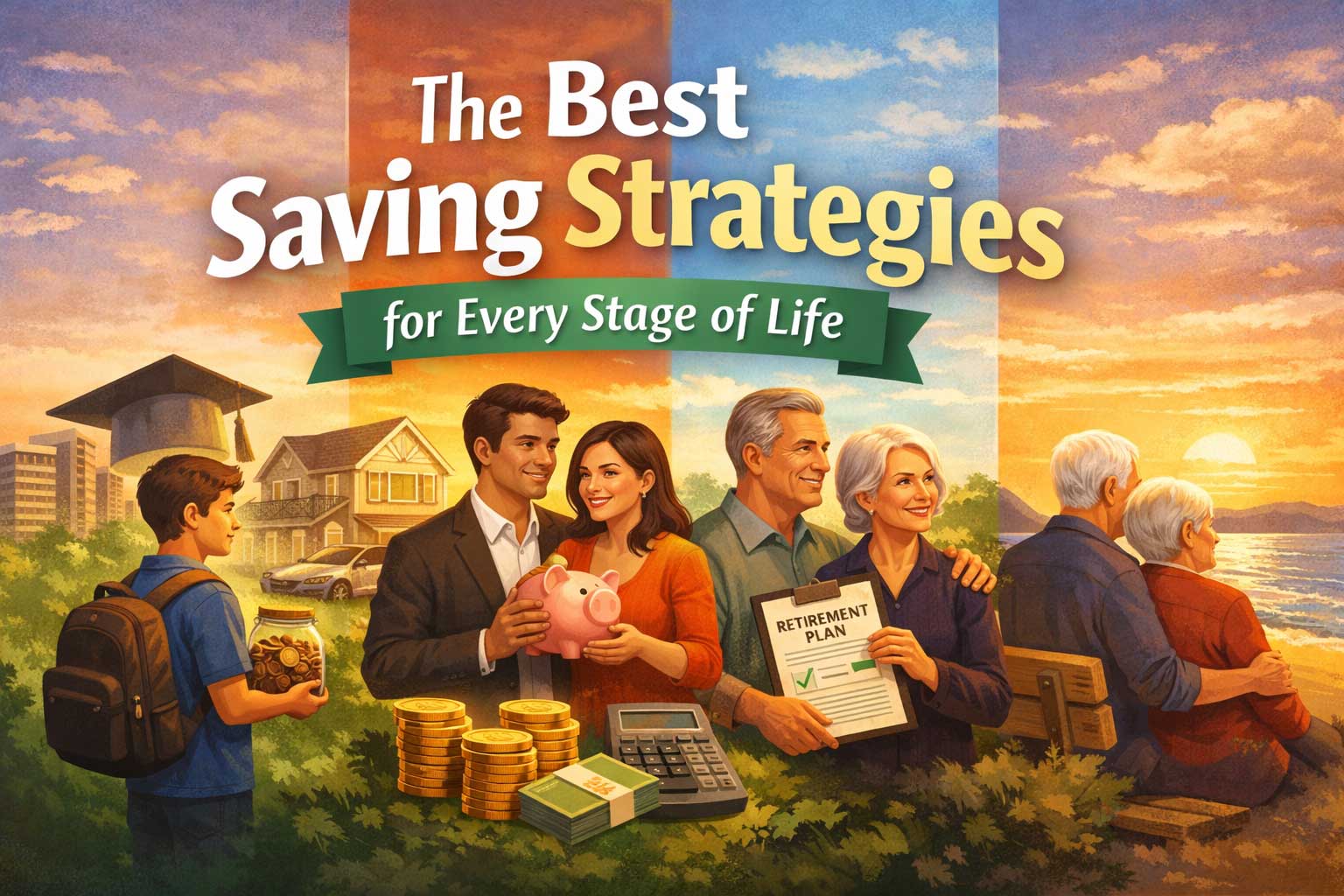
Saving money isn’t one skill you learn once and then “finish.” It’s a lifelong system that changes as your income grows, your responsibilities shift, and your goals evolve. What works when you’re 19 and living at home won’t fit the same way when you’re 35 with a mortgage and kids, or when you’re 58 trying to catch up on retirement savings while supporting aging parents.
The good news is this: you don’t need a perfect income, a flawless budget, or a finance degree to save well. You need a strategy that matches your life stage, a structure that makes saving easier than spending, and a set of habits that survive real life—unexpected bills, job changes, family emergencies, and all the “normal” chaos that causes people to fall off track.
This guide gives you a complete, stage-by-stage roadmap. You’ll learn what to prioritize, how to set up your system, what to do when money is tight, and how to adjust your plan as your life changes. You’ll also get practical checklists and examples you can use immediately.
The Core Saving Principles That Work at Any Age
Before we break savings down by life stage, you need a foundation that stays true throughout your life. Think of these as the “laws” of saving: they apply whether you’re a student, a new parent, or preparing for retirement.
1) Your saving rate matters more than your income
A high income does not guarantee wealth, and a modest income does not doom you. The difference is the gap between what you earn and what you keep.
- If your lifestyle expands every time your paycheck grows, you’ll feel broke at any income level.
- If you protect and increase your saving rate, you can build financial stability even while your income is still growing.
Practical takeaway: Aim to increase your saving rate each time your income rises—even if it’s just by 1–2%.
2) Saving is easier when it’s automatic
Manual saving relies on motivation. Automatic saving relies on systems.
- Automate transfers to savings and investments right after payday.
- Create separate savings “buckets” for different goals so you don’t mix money and accidentally spend it.
Practical takeaway: If you only do one thing after reading this article, automate your savings.
3) Your emergency fund is your financial shock absorber
Life will eventually surprise you—medical costs, car repairs, family emergencies, job interruptions. When you don’t have a cushion, you borrow. And when you borrow, your future savings get sacrificed to interest payments.
A strong emergency fund:
- reduces stress
- prevents debt
- protects your long-term goals
Practical takeaway: Start with a small emergency fund, then build it over time.
4) You can’t out-save bad spending habits, but you can out-system them
You don’t need extreme discipline. You need friction and structure:
- make saving automatic
- make spending slightly inconvenient
- give every dollar a job
Practical takeaway: Build a system that makes “the right choice” the default.
5) The goal is consistency, not perfection
Most people fail because they assume saving is supposed to look smooth. Real saving looks like:
- progress
- setbacks
- adjustments
- progress again
Practical takeaway: Your plan must be flexible enough to survive a bad month.
The “Three-Layer” Saving System (Use This at Any Stage)
A powerful way to organize savings is to think in layers. This prevents the common mistake of putting everything into one savings account and constantly pulling from it.
Layer 1: Safety (Stability Savings)
This is your protection:
- emergency fund
- essential insurance deductibles
- short-term risk buffers
Layer 2: Goals (Lifestyle and Life Milestone Savings)
This is your planned spending:
- moving costs
- car replacement
- home down payment
- wedding
- education
- travel
- baby expenses
Layer 3: Freedom (Long-Term Wealth)
This is your future:
- retirement savings
- long-term investing
- financial independence goals
Why this works:
When you separate savings by purpose, you stop stealing from your future every time a short-term cost appears.
Stage 1: Teens and Early Adulthood (Ages ~13–19)
This stage isn’t about saving huge amounts. It’s about building habits that make saving feel normal.
What to prioritize
- Learn the basics of money flow: earning, spending, saving
- Build the habit of paying yourself first
- Avoid expensive mistakes that follow you for years
- Start a small emergency buffer even if it’s tiny
Best saving strategies for this stage
Strategy A: Save a fixed percentage of every dollar you receive
Whether it’s allowance, gifts, or part-time income, choose a percentage you save no matter what.
- Start with 10% if money is tight
- Push toward 20% if you can
Why it works: It trains your brain to treat saving as a normal “bill,” not an optional leftover.
Strategy B: Use a simple “3-bucket” split
- Save (future): 20%
- Spend (fun): 70%
- Give (optional): 10%
Adjust the numbers, but keep the structure.
Strategy C: Create your first “mini emergency fund”
Aim for a small number like:
- the cost of a phone repair
- a month of transportation
- basic school supplies
Even a small emergency fund prevents panic spending.
Strategy D: Learn to delay purchases on purpose
A powerful habit is the “48-hour rule”:
- wait 48 hours before buying anything non-essential
- if you still want it and it fits your plan, buy it intentionally
This protects you from impulse spending.
Mistakes to avoid early
- spending every paycheck because you “don’t have bills”
- upgrading your lifestyle too quickly
- thinking saving is only for rich people
- ignoring basic money skills (this is when the habits get installed)
Quick checklist for teens
- Save a percentage of every income source
- Track spending for 30 days once per year
- Build a mini emergency fund
- Learn delayed gratification (48-hour rule)
Stage 2: Your 20s (Ages ~20–29)
Your 20s are the “foundation decade.” Even if you don’t earn much yet, your habits and early decisions have a huge effect later.
What to prioritize
- Emergency fund
- High-interest debt avoidance
- Skill-building and income growth
- Early retirement investing (even small amounts)
- Separating wants from lifestyle inflation
Best saving strategies for this stage
Strategy A: Build the first real emergency fund
A strong starting target is:
- 1 month of essential expenses, then
- 3 months, then
- 6 months (depending on job stability and responsibilities)
If your income is irregular, aim higher.
How to build it quickly:
- automate a transfer on payday
- save “found money” (refunds, bonuses, gifts)
- reduce your biggest cost (often housing or transport) temporarily
Strategy B: Use “paycheck architecture” instead of willpower
On payday, split your money immediately:
- essentials
- bills
- emergency fund
- goal savings
- fun spending
This prevents the “I’ll save later” trap.
Strategy C: Save for predictable “life upgrades” before they happen
In your 20s, you’ll likely face:
- moving costs
- first apartment deposits
- laptop replacement
- travel
- career-related expenses
Create a “life upgrades” savings bucket. Even small monthly contributions help.
Strategy D: Avoid lifestyle inflation (the silent wealth killer)
Lifestyle inflation is when you increase spending simply because you can.
Common examples:
- buying a more expensive car than needed
- upgrading apartments too quickly
- constantly eating out because work is stressful
The fix: Create a rule:
When your income rises, allocate the increase like this:
- 50% to saving/investing
- 30% to lifestyle improvements
- 20% to goal acceleration (debt payoff, emergency fund)
Adjust numbers, but keep a rule.
Strategy E: Start retirement saving early (even if small)
Early contributions matter because time is powerful. If you wait until your 30s or 40s, you often need to save dramatically more per month to catch up.
Even if you can only do a small amount, start the habit:
- set an automatic contribution
- increase it yearly
Strategy F: “Debt-proof” your future before it starts
If you have debt, focus on:
- paying down high-interest debt aggressively
- avoiding adding new consumer debt
- not financing lifestyle choices that don’t build long-term value
Common 20s saving traps
- assuming you’ll “start later”
- using credit to maintain a social lifestyle
- not learning how to budget because it feels restrictive
- ignoring small recurring expenses (subscriptions, delivery fees)
Quick checklist for your 20s
- Build a 1–3 month emergency fund (minimum)
- Automate savings on payday
- Create goal-specific savings buckets
- Increase savings when income rises
- Begin long-term investing, even small
Stage 3: Your 30s (Ages ~30–39)
Your 30s often bring bigger responsibilities: home ownership, marriage, children, career growth, and rising fixed expenses. Saving becomes more complex, but also more powerful because your income may be higher.
What to prioritize
- Stronger emergency fund (3–6 months)
- Retirement contributions rising with income
- Family protection planning
- Major goal savings (home, childcare, education)
- Balancing multiple savings goals without chaos
Best saving strategies for this stage
Strategy A: Upgrade your emergency fund to match your real life
If you have:
- a mortgage
- dependents
- a single-income household
- self-employment income
…you likely need a larger emergency fund than you did in your 20s.
A common target is 3–6 months, but if your income is unstable or your household depends on you, consider 6–12 months.
Strategy B: Build “sinking funds” for predictable big expenses
A sinking fund is money you save gradually for expenses that will happen.
Common 30s sinking funds:
- car repairs and replacement
- home maintenance (repairs, appliances, renovations)
- yearly insurance payments
- medical costs not covered
- holidays and gifts
- childcare and school costs
Why this matters:
Many people use credit not for emergencies, but for predictable expenses they failed to plan for.
Strategy C: Make retirement contributions non-negotiable
In your 30s, you have a strong advantage: your earning power tends to rise, but you still have time for compounding growth.
A powerful approach:
- treat retirement saving like a mandatory bill
- increase contributions each time you get a raise
- avoid “pausing” retirement saving unless absolutely necessary
Strategy D: Use a “priority ladder” for competing goals
When you’re saving for multiple things, it’s easy to feel stuck. Use a ladder:
- Minimum emergency buffer
- Employer match or equivalent benefit (if applicable)
- High-interest debt payoff
- Full emergency fund target
- Goal savings (home, education, baby costs)
- Increased retirement investing
- Extra investing for freedom goals
The exact order can change for your situation, but having a ladder keeps you consistent and reduces decision fatigue.
Strategy E: Protect your progress with “family financial systems”
This stage often includes shared finances. Even if you keep accounts separate, align on:
- shared goals
- spending boundaries
- emergency plans
- monthly check-ins
The goal is not control. It’s clarity.
Strategy F: Create a “career investment fund”
In your 30s, investing in your earning power can be one of the best returns:
- certifications
- tools
- training
- networking opportunities
- health and energy (sleep, fitness, stress reduction)
Saving isn’t only about cutting. Sometimes it’s about funding the upgrades that increase future income.
Common 30s saving traps
- underestimating the real cost of home ownership
- letting childcare costs erase all saving (without re-planning)
- upgrading lifestyle in multiple areas at once
- not adjusting insurance and protection planning as responsibilities grow
Quick checklist for your 30s
- Build sinking funds for predictable expenses
- Strengthen emergency fund to match responsibilities
- Increase retirement contributions with income
- Use a priority ladder for goals
- Hold a monthly money check-in (solo or with partner)
Stage 4: Your 40s (Ages ~40–49)
Your 40s are often your highest-earning decade, but also one of the most expensive. You may be supporting children, maintaining a home, and helping parents. This is where strategic saving prevents burnout and future regret.
What to prioritize
- Peak earning years: maximize saving rate
- Retirement acceleration
- Education and family goals without sacrificing your future
- Debt reduction
- Midlife financial resilience
Best saving strategies for this stage
Strategy A: Increase your saving rate before lifestyle expands further
When income rises, it’s easy to “upgrade everything.” A better approach is to lock in a higher saving rate first.
A useful rule:
- when income increases, increase savings immediately
- only then decide what lifestyle upgrades truly matter
Strategy B: Run a “midlife financial stress test”
Ask:
- If income stopped for 6 months, what breaks first?
- Which expenses are essential vs. optional?
- How much do we need monthly to survive?
- What debts would become dangerous?
Then build your plan around your weak points:
- higher emergency fund if needed
- reduced debt if it’s a risk
- simplified fixed expenses
Strategy C: Avoid the “education at any cost” trap
Many parents want to fund their children’s education fully, but it should not destroy retirement savings. There are ways to support education:
- saving early and consistently
- choosing cost-effective options
- having children contribute through work or scholarships
- balancing support with long-term family stability
A strong guiding principle:
You can help your child in many ways, but you can’t borrow for retirement as easily as you can borrow for education.
Strategy D: Pay down debt strategically
In your 40s, debt payoff often becomes more important because:
- retirement is closer
- cash flow flexibility matters more
- high payments reduce your ability to save aggressively
Targets to consider:
- eliminate high-interest consumer debt immediately
- create a plan for mortgage payoff (full payoff isn’t always required, but clarity is)
- reduce car loans and repeated financing cycles
Strategy E: Simplify your financial life
Complexity creates leaks. Simplification improves saving without feeling restrictive.
Examples:
- fewer accounts, but organized buckets
- fewer subscriptions
- fewer “random” spending categories
- fewer expensive habits that don’t bring real value
You don’t need to become minimalistic. You need spending aligned with what you truly care about.
Common 40s saving traps
- supporting too many people without boundaries
- assuming you can “catch up later” without a plan
- high fixed expenses (big house, big cars, big lifestyle)
- ignoring health costs that may rise over time
Quick checklist for your 40s
- Raise saving rate during peak earnings
- Stress test your budget for income disruption
- Balance education goals with retirement reality
- Reduce debt to protect future cash flow
- Simplify spending and recurring expenses
Stage 5: Your 50s (Ages ~50–59)
In your 50s, saving becomes more focused and intentional. Retirement is no longer “someday”—it’s a date on the calendar. This is the decade for clarity, catch-up strategies, and making sure your future lifestyle is funded.
What to prioritize
- Retirement catch-up (if behind)
- Debt reduction and cash flow control
- Healthcare planning awareness
- Downsizing or lifestyle adjustments (if helpful)
- Protecting your savings from big mistakes
Best saving strategies for this stage
Strategy A: Define what retirement actually costs (your “retirement number”)
Instead of guessing, estimate:
- essential monthly costs (housing, food, utilities, insurance, basic transport)
- lifestyle costs (travel, hobbies, gifts, events)
- healthcare and unexpected costs
- taxes and inflation assumptions (depending on your country)
Then compare:
- projected retirement income sources
- your current savings
- your required monthly saving rate
This turns retirement from vague anxiety into a math-based plan.
Strategy B: Focus on cash flow flexibility
Retirement planning is not only about a large account balance. It’s also about:
- low monthly obligations
- manageable housing costs
- fewer debt payments
- predictable spending
Reducing fixed expenses can be like giving yourself a permanent raise.
Strategy C: Use “catch-up” behavior even if you can’t contribute more
If you can’t save dramatically more, you can still catch up by:
- reducing major expenses
- pausing low-value spending
- downsizing a car or home
- increasing income through a side stream or consulting
- delaying retirement by a year or two (often powerful)
Even small changes can shift outcomes significantly.
Strategy D: Build a “retirement transition fund”
Many people underestimate the costs of transitioning into retirement:
- home repairs before fixed income
- replacing a vehicle
- paying off a final debt
- relocation expenses
- medical or family support costs
A transition fund prevents you from draining long-term savings right at the start.
Strategy E: Protect against emotional investing mistakes
As retirement gets closer, big market swings can feel scarier, and fear can cause costly decisions. A strong plan includes:
- appropriate risk level for your timeline
- diversified approach
- clear rules for what you will do during market declines
- avoiding panic changes based on headlines
Common 50s saving traps
- spending as if retirement is still far away
- making risky investments to “catch up fast”
- supporting adult children without a clear plan
- ignoring healthcare and long-term care realities
Quick checklist for your 50s
- Calculate your retirement spending target
- Reduce fixed expenses and debt payments
- Build a retirement transition fund
- Increase savings rate or adjust retirement date
- Set rules to avoid panic financial decisions
Stage 6: Your 60s (Ages ~60–69)
In your 60s, the focus shifts from aggressive accumulation to smart preparation and controlled transitions. Whether you retire at 60, 65, 70, or later, the decisions you make now shape the stability of your next decades.
What to prioritize
- Preserving savings and reducing risk
- Creating a sustainable withdrawal plan
- Managing healthcare costs and insurance
- Planning for longevity
- Protecting against scams and costly mistakes
Best saving strategies for this stage
Strategy A: Shift from “saving” to “sustaining”
You still save, but the mindset changes:
- protect your principal
- reduce exposure to major risks
- maintain enough liquidity for short-term needs
- ensure income sources can cover essentials
This doesn’t mean “no growth.” It means “growth with stability.”
Strategy B: Build a “cash buffer” to avoid selling investments at the wrong time
A cash buffer can cover:
- 6–24 months of essential expenses (varies by comfort and income sources)
- known upcoming costs (medical, home repairs)
This reduces the pressure to sell long-term investments during downturns.
Strategy C: Plan for unpredictable healthcare costs
Healthcare can become one of the largest expenses. Strategies include:
- budgeting higher than you think you need
- reducing other fixed expenses to create room
- maintaining a medical sinking fund
- reviewing insurance and coverage carefully
Strategy D: Audit your spending for “retirement reality”
Some costs drop in retirement (commuting, work clothes), while others may rise (healthcare, travel, home utilities).
Create a retirement budget based on:
- real spending history
- realistic lifestyle plans
- buffers for surprises
Strategy E: Strengthen protection and reduce vulnerability
Older adults are often targeted by financial scams. Protection includes:
- simplifying accounts
- using strong security habits
- involving a trusted person in oversight (if appropriate)
- not making large decisions under time pressure
Common 60s saving traps
- retiring without a real spending plan
- withdrawing too aggressively early
- keeping too much money idle without purpose (or too much risk without protection)
- ignoring the possibility of living longer than expected
Quick checklist for your 60s
- Create a sustainable retirement spending plan
- Hold a cash buffer for stability
- Plan for healthcare and rising costs
- Simplify finances and strengthen security
- Reduce high-risk financial decisions
Stage 7: Retirement (Ages ~70 and beyond)
Retirement is not the end of money management. It’s the stage where your system must protect your lifestyle, reduce stress, and keep you flexible.
What to prioritize
- Stable cash flow
- Protection from big unexpected costs
- Spending alignment with values
- Longevity planning
- Legacy and family planning (if desired)
Best saving strategies for this stage
Strategy A: Use a “needs vs. wants” spending structure
A healthy retirement budget separates:
- Needs: housing, utilities, food, healthcare, basic transport
- Wants: travel, hobbies, gifts, entertainment
This helps you adjust without panic if markets drop or expenses rise.
Strategy B: Keep an “unplanned expenses” fund
Even in retirement, things break:
- appliances
- home repairs
- medical costs
- family emergencies
A dedicated fund prevents stress and protects long-term accounts.
Strategy C: Review spending annually and adjust early
Small adjustments early prevent painful cuts later.
Once per year, review:
- what you spent vs. planned
- upcoming major costs
- whether your buffer is still adequate
- whether you need to reduce or increase discretionary spending
Strategy D: Avoid large financial commitments that reduce flexibility
Retirement works best when you keep options open. Be careful with:
- co-signing loans
- high ongoing support obligations
- large purchases that increase fixed expenses
- risky “too good to be true” opportunities
Strategy E: Focus on quality of life, not just saving
At this stage, saving is still valuable—but it’s not the only goal. Your money should support:
- health
- connection
- comfort
- meaningful experiences
The best strategy is one that lets you live well without fear.
Common retirement traps
- not budgeting for healthcare
- ignoring inflation over time
- supporting others beyond your capacity
- overreacting to market volatility
Quick checklist for retirement
- Separate needs and wants spending
- Maintain an unplanned-expense fund
- Review budget yearly and adjust early
- Avoid rigid obligations and risky deals
- Spend intentionally on what matters most
Special Situations: How to Save When Life Doesn’t Fit a “Stage”
If you’re starting late
Starting late doesn’t mean you’re doomed. It means you need a plan with urgency and realism.
Focus on:
- reducing big expenses
- increasing income (even temporarily)
- cutting high-interest debt
- increasing saving rate consistently
- considering retirement timing adjustments
Even a one- or two-year shift can dramatically improve outcomes.
If you have irregular income (freelance, commission, business)
Use a “base income” budget:
- define a conservative monthly income level
- build your life around that
- during high-income months, allocate extra to:
- taxes (if applicable)
- emergency buffer
- sinking funds
- long-term investing
Also keep a larger cash buffer because irregular income creates higher risk.
If you’re supporting family members
Support can be meaningful—but it must be structured, or it can destroy your future.
Helpful approaches:
- set a fixed monthly support amount
- avoid open-ended obligations
- align support with your budget
- keep retirement saving protected
If you have debt and can’t save much
Start with:
- a small emergency buffer (to stop new debt)
- aggressive payoff of high-interest debt
- then re-expand savings once debt pressure is reduced
You don’t need to choose “only debt” or “only savings.” You need a sequence.
The Best Saving Goals by Stage (Simple Targets You Can Use)
These are general targets you can adjust based on your location, income stability, and responsibilities.
Teens
- Save 10–20% of any income
- Build a mini emergency fund
20s
- Emergency fund: 1–3 months (work toward 3–6)
- Start long-term investing habit
- Build goal buckets (moving, travel, car)
30s
- Emergency fund: 3–6 months (or more with dependents)
- Sinking funds for home/child expenses
- Retirement contributions increase with raises
40s
- Increase saving rate during peak earnings
- Stress test budget
- Reduce debt and fixed expenses
50s
- Retirement catch-up plan
- Retirement transition fund
- Reduce high monthly obligations
60s
- Cash buffer for stability
- Sustainable withdrawal plan
- Strong healthcare planning
Retirement
- Needs vs. wants spending structure
- Unplanned-expense fund
- Annual reviews and adjustments
A Step-by-Step Plan to Implement These Strategies (Starting Today)
Step 1: Choose your savings buckets
At minimum, create:
- emergency fund
- short-term goals
- long-term future/retirement
Step 2: Set automatic transfers
Automate savings to happen:
- immediately after payday
- before you can spend the money
Step 3: Pick a starting savings rate
If you’re stuck, choose:
- 5% if money is tight
- 10% if you’re stable
- 15–20% if you’re building aggressively
The rate matters less than starting and increasing.
Step 4: Create sinking funds for predictable expenses
List the big predictable costs for your stage:
- car repairs
- home maintenance
- yearly insurance
- school costs
- holidays
Divide each by 12 and save monthly.
Step 5: Increase savings once per year
Set a yearly “money upgrade” date:
- increase savings rate by 1–3%
- adjust buckets based on new goals
- review spending leaks
Consistency beats intensity.
Common Saving Mistakes That Destroy Progress (And How to Avoid Them)
Mistake 1: Saving without a purpose
If savings has no specific purpose, it becomes easy to spend.
Fix: Label savings buckets.
Mistake 2: Only saving what’s left over
Leftover saving is unreliable.
Fix: Pay yourself first.
Mistake 3: Treating predictable expenses like emergencies
Car repairs and annual bills are predictable.
Fix: Use sinking funds.
Mistake 4: Lifestyle upgrades happening faster than income growth
This creates “invisible poverty,” where you earn more but feel broke.
Fix: Increase saving rate with raises before upgrading lifestyle.
Mistake 5: Not adjusting the plan when life changes
A plan made in your early 20s won’t fit your late 30s automatically.
Fix: Review annually and at major life events.
FAQs: The Best Saving Strategies for Every Stage of Life
1) How much should I save each month?
A common target is 10–20% of income, but the best answer depends on your stage, debt level, and income stability. If you can’t do that yet, start smaller and increase annually. Consistency matters more than the perfect number.
2) Should I save or invest first?
In most cases:
- build a small emergency buffer first
- pay down high-interest debt
- then invest consistently while continuing to grow your emergency fund
A balanced approach often works best long-term.
3) What if my income is too low to save?
Start with tiny amounts and focus on:
- preventing new high-interest debt
- reducing your biggest expense where possible
- increasing income through skills, overtime, or side work
Even small savings can break the cycle and build momentum.
4) Is an emergency fund still necessary if I have credit available?
Yes. Credit is expensive and can disappear when you need it most. An emergency fund keeps you stable and reduces stress.
5) How do I save when my expenses keep rising?
Use a three-part approach:
- cut or reduce one large expense category
- use sinking funds to stop surprise spending
- increase income over time
Also, protect savings with automation so it doesn’t depend on motivation.
6) How do I save while supporting family?
Set boundaries:
- decide a fixed support amount
- include it in your budget
- protect retirement savings
Support is generous when it’s sustainable.
7) What’s the best way to stay consistent?
Build systems:
- automate savings
- create separate buckets
- review monthly (quickly) and yearly (deeply)
Then treat saving like a normal bill, not an optional goal.
Conclusion: The Best Saving Strategy Is the One That Fits Your Life Right Now
Saving isn’t about being perfect. It’s about being prepared. Each stage of life comes with new challenges and new opportunities. The best strategy is the one that matches your current reality and still moves you forward.
If you’re young, focus on habits and avoiding expensive mistakes. If you’re building a family, use structure—emergency funds and sinking funds—to prevent stress and debt. If retirement is closer, prioritize clarity, cash flow, and protection. And if you’re already retired, your job is sustainability: stable spending, thoughtful planning, and flexibility.
No matter your stage, the path is the same:
- automate savings
- separate savings by purpose
- plan for predictable costs
- increase savings as life changes
- stay consistent through imperfect months